When Hauwa prepared for the birth of her second child, there was no carefully packaged delivery kit waiting beside her.
She delivered at home.
Like many women in communities where resources are limited, she used what was available: cloth and an ordinary razor blade.
At the time, she did not fully understand the danger.
“We didn’t know it was dangerous.”
Hauwa’s name has been changed to protect her privacy, but her experience reflects one of the challenges identified when ETTDI began the MamaSafe Initiative in Nasarawa State. Some women were still delivering with improvised materials that could increase the risk of infection for both mother and newborn.
Then Hauwa became pregnant again.
This time, something was different.
A conversation before the delivery room
During a Group Antenatal Care session in November 2025, a health worker spoke to Hauwa about clean childbirth, preparing for delivery and the importance of skilled care.
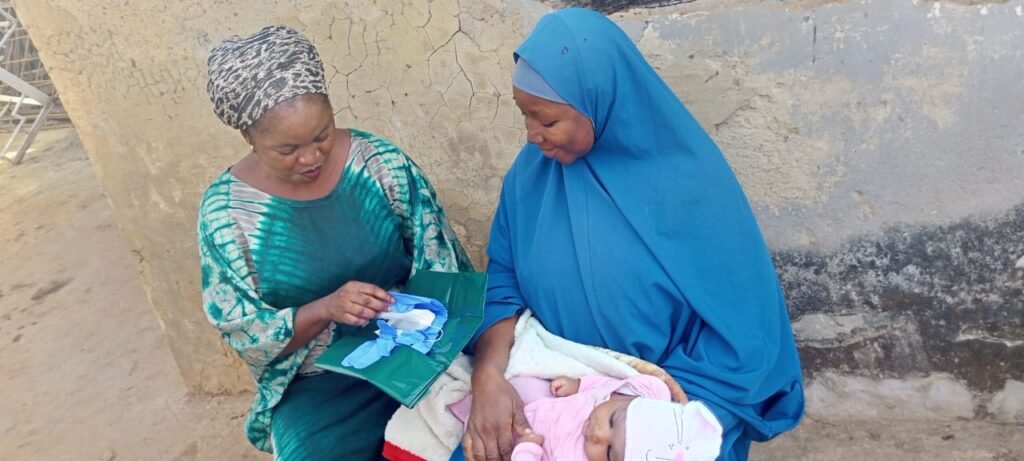
She also received a MamaSafe Clean Delivery Kit.
Inside were simple but important items: sterile gloves, antiseptic soap and swabs, gauze, maternity pads, umbilical cord ties and a clean disposable delivery mat.
But perhaps the most important part of MamaSafe was not what came inside the package.
It was the conversation around it.
The health worker explained why every item mattered—and why Hauwa should deliver at a health facility.
Two months later, when labour came, Hauwa made a different journey.
Instead of remaining at home, she went to Akwanga Township Primary Health Care Centre, where she delivered her third child with a trained health worker present.
No postnatal complications were reported.
Her description of that birth was simple:
“When my baby came, everything was clean. I am not afraid like before.”
Hauwa was not alone
Across Akwanga and Keffi, 1,000 women received MamaSafe Kits through 21 primary healthcare facilities.
At the same time, ETTDI and local health workers took maternal health conversations beyond clinic walls.
They went into communities, homes, antenatal groups, markets and other gathering spaces. Over four months, 62 community sessions reached 1,264 people—including 486 pregnant women, 312 new mothers and 254 husbands and male partners.
By the end of the project, 85.5% of surveyed women reported facility-based delivery, compared with 74% at baseline. Skilled birth attendance also rose from 79% to 91.2%.
And among women who participated in maternal health awareness sessions, 97.6% said those sessions influenced their decision to deliver at a health facility.
Safer motherhood begins before labour starts
MamaSafe is ultimately about something larger than a kit.
It is about helping a woman know where to go.
Helping her family understand why it matters.
Helping a health worker have the knowledge and basic supplies needed to support her.
And helping communities see childbirth not simply as something women must endure, but as an event worth preparing for and protecting.
For Hauwa, the difference between her second and third birth began long before she entered the delivery room.
It began with information, preparation—and the confidence to choose differently.
Because every mother deserves to approach childbirth with hope rather than fear.
Help Us Make Every Birth Safer