
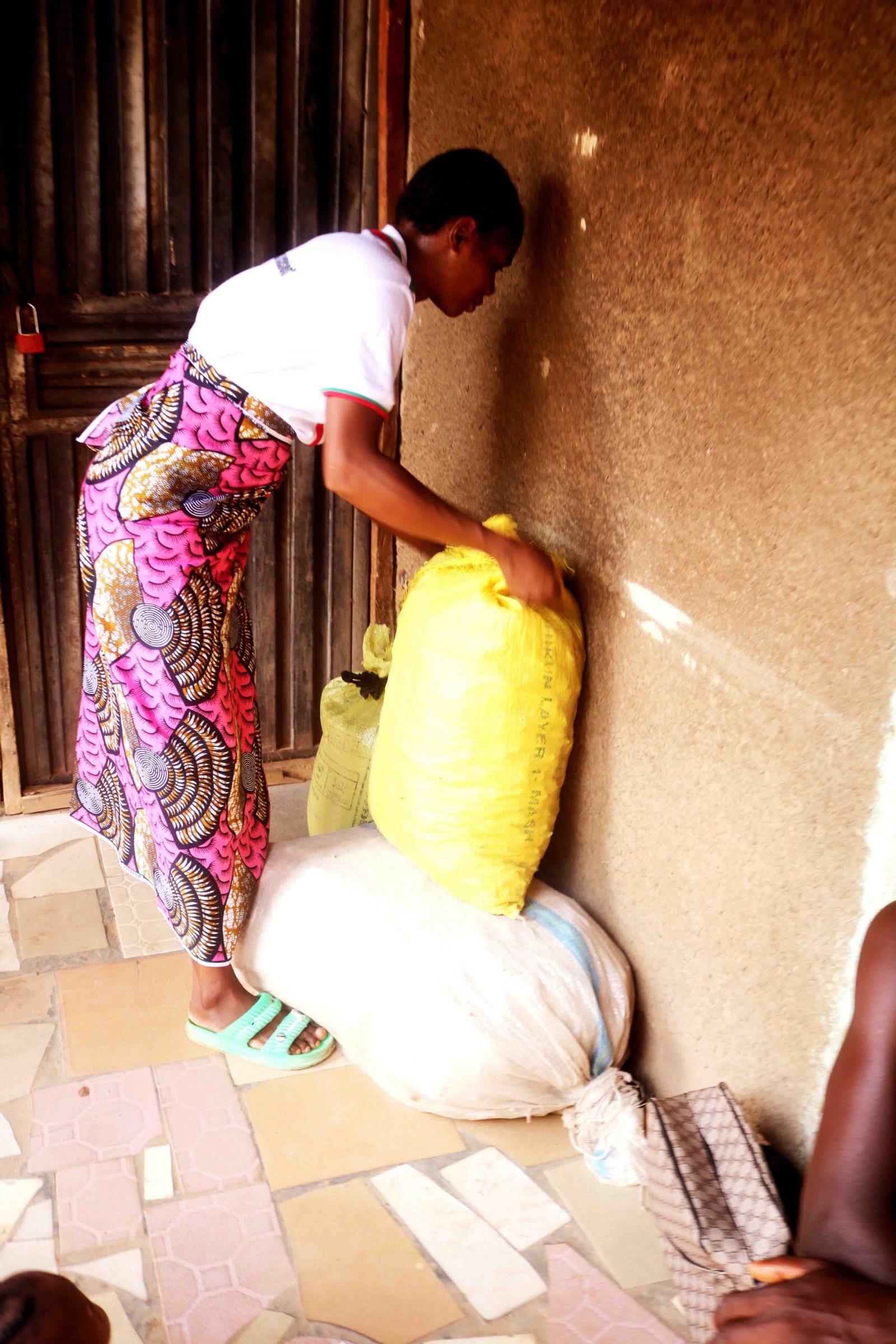
| Participant | Justina Agyaesopa |
| Location | Kuje, FCT, Abuja |
| Business | Sale of Grains and Foodstuff |
| Disability | Visually impaired |
| Programme | Empower Her Ability |
Before joining the Empower Her Ability Project, Justina Agyaesopa had transitioned from poultry farming to selling grains and foodstuff after facing challenges in her previous business. As she established herself in this new venture, she recognised the need to strengthen her business management skills and develop more effective ways of running her operations.
As a woman with low vision, Justina also navigated challenges related to limited capital, transportation costs, and disability-related stigma. These barriers affected her ability to reinvest in her business and pursue growth opportunities.
One of Justina’s major challenges was limited working capital. Because she was unemployed, she often relied on income from her business to meet personal needs, leaving less money available for reinvestment. Transportation costs incurred while sourcing goods further reduced the resources she could dedicate to expanding her operations.
She also experienced negative attitudes from some people because of her disability. These challenges added to the difficulties of building a sustainable business while adjusting to a new line of work.
Through the Empower Her Ability Project, Justina received entrepreneurship training and six months of mentorship support.
She described the training as eye-opening, explaining that it helped her understand practical business management strategies for running her enterprise more efficiently. The mentorship was particularly valuable because it addressed her specific business needs rather than relying on a one-size-fits-all approach.
This combination of practical learning and tailored guidance helped Justina identify areas for improvement and become more intentional about managing her business.
Following her participation in the project, Justina reports increased self-confidence, stronger business capacity, and improved customer engagement skills.
She now keeps proper financial records and tracks her income and expenses more effectively. These changes have helped her reduce losses and gain a clearer understanding of her business performance.
She has also developed a better understanding of customer relationship management, including approaches that encourage repeat patronage. By applying these lessons, Justina has made gradual progress in growing her grain and foodstuff business.
Her experience reflects the importance of practical entrepreneurship training and personalised mentorship in helping entrepreneurs navigate business transitions and build stronger foundations for growth.
Despite the progress she has made, limited capital and transportation costs continue to constrain Justina’s expansion plans. Additional financial resources would enable her to increase her stock, improve the efficiency of sourcing goods, and reinvest more consistently in her business.
With continued access to appropriate support and resources, Justina hopes to strengthen her operations, reach more customers, and build a more sustainable source of income.
| Key change: Justina progressed from navigating a new business venture with limited structure and financial tracking to managing her grain and foodstuff business with greater confidence and discipline. Improved record keeping, reduced losses, and stronger customer engagement have provided a foundation for gradual growth, although access to additional capital remains essential for further expansion.
|