
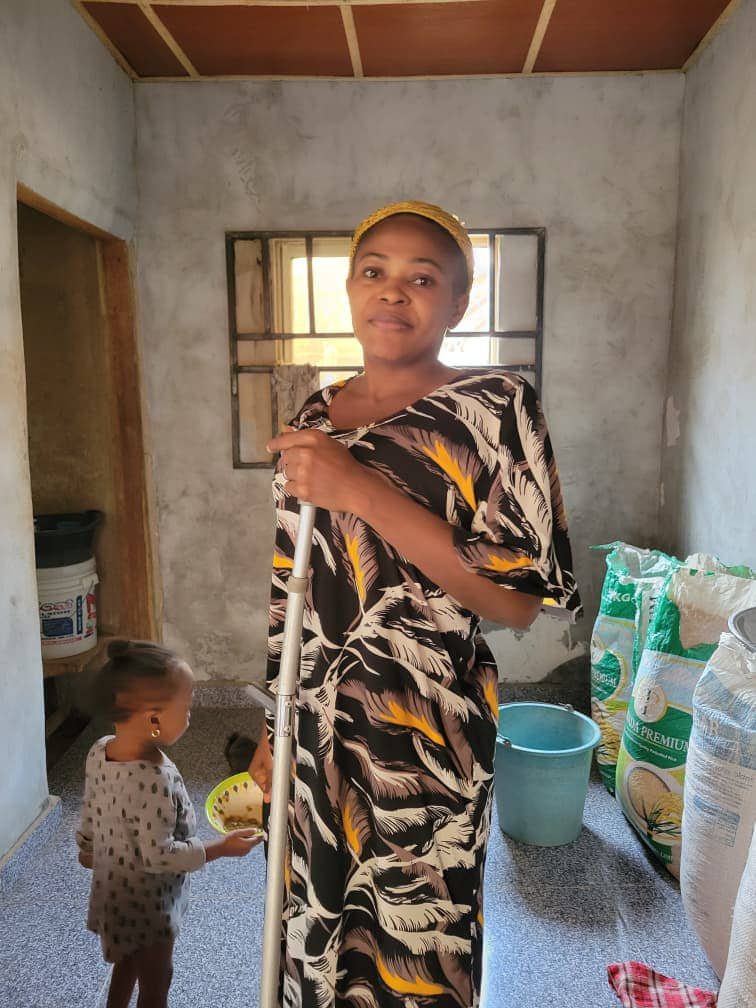
| Participant | Esther Isaac |
| Location | Kubwa, FCT, Abuja |
| Business | Grains farming |
| Disability | Physical disability |
| Programme | Empower Her Ability |
Before joining the Empower Her Ability Project, Esther Isaac was actively engaged in grain farming but operated without formal bookkeeping, financial records, or accountability systems. Her focus was primarily on cultivation and harvesting, with limited tracking of expenses, profits, and losses.
Without accurate financial information, assessing her business performance and planning for expansion was difficult. Her reliance on rented farmland also limited her opportunities to increase production and grow her agricultural enterprise.
Esther faced several barriers as a woman with a physical disability. Limited access to finance, dependence on family members for farm labour, and difficulties accessing her farmland affected her ability to manage and expand her business independently.
Poor road conditions, particularly during the rainy season, made travelling to her farm challenging. As a result, she often depended on her husband and father-in-law to support farm activities.
The absence of proper financial records further complicated her ability to assess business performance, make informed decisions, and plan for sustainable growth.
Through the Empower Her Ability Project, Esther received entrepreneurship training, participated in a physical bootcamp, benefited from mentorship, and gained exposure to grant and loan opportunities.
She particularly valued the mentorship support, which provided practical guidance and follow-up on financial tracking, business planning, and growth strategies.
The training helped her understand the importance of treating farming as a business that requires proper financial management, accountability, and deliberate planning—not just cultivation and harvesting.
Following her participation in the project, Esther began keeping proper financial records and tracking business expenses, gains, and losses more effectively. These improved management practices have helped her gain a clearer understanding of her farm’s performance and make more informed business decisions.
Her business has also expanded. Esther progressed from cultivating one rented farmland plot to operating on two plots, representing an important step towards increasing her agricultural activities.
Beyond these practical improvements, she reports greater self-confidence and stronger participation in decisions concerning the family business. She is now more confident speaking about her work and contributing to household business discussions.
For Esther, these changes reflect not only improved farming practices but also greater confidence in her ability to manage and grow her enterprise.
Despite this progress, access to finance and transportation remain significant challenges. Esther hopes to secure additional resources to expand her farming activities and improve her ability to access her farmland, especially during periods of difficult weather.
More accessible transportation options and continued financial support would help reduce her dependence on family members for farm access and enable her to participate more actively in daily agricultural operations.
With the business management skills she has developed, Esther is better positioned to build on her progress and pursue further growth in grain farming.
| Key change: Esther transitioned from informal farming practices without structured financial tracking to more organised business management. Improved record keeping, expansion from one rented farmland plot to two, and increased confidence in business decision-making have strengthened her foundation for agricultural growth, although access to finance and transportation remains essential for further expansion.
|