
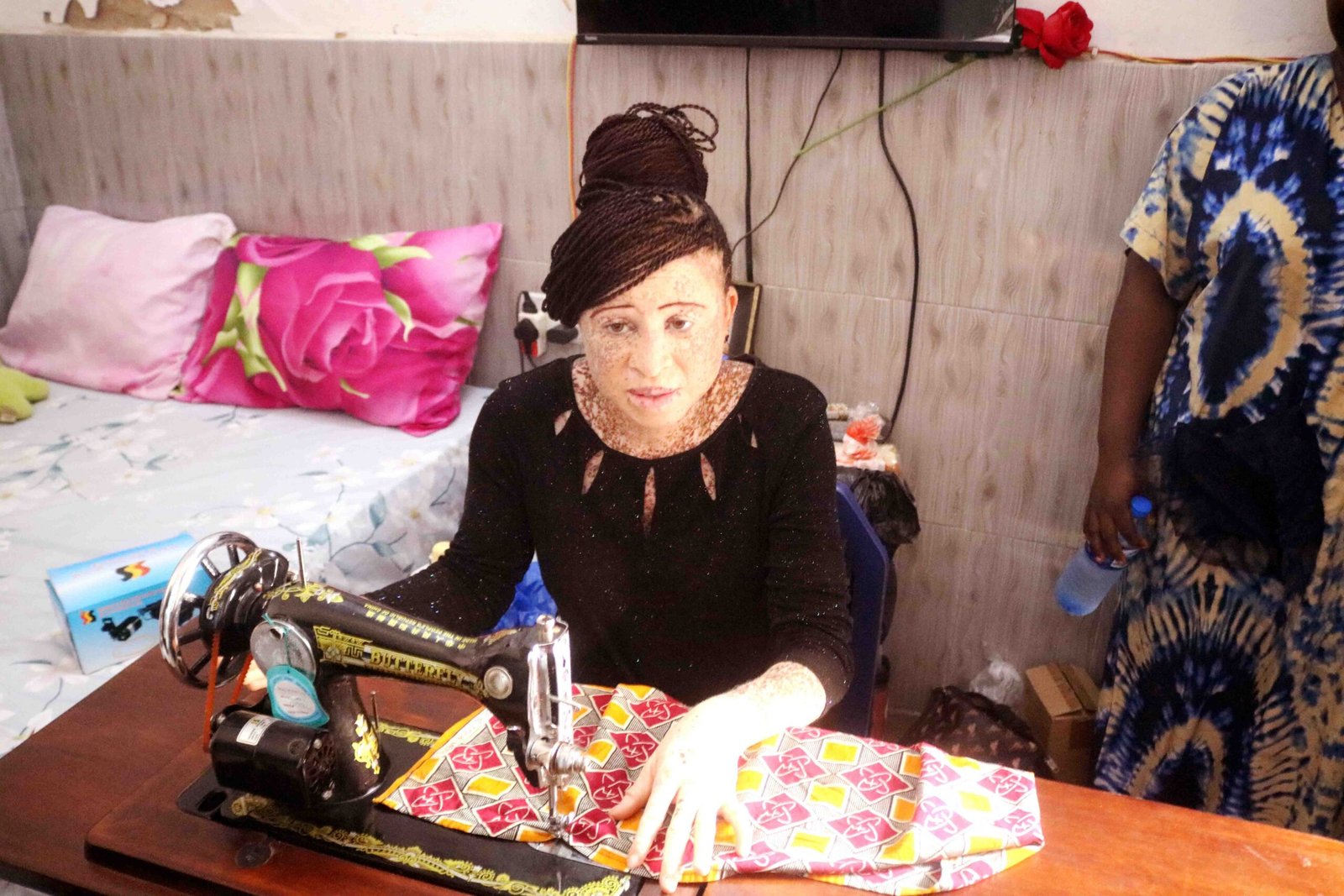
| Participant | Ladi Gimba |
| Location | Mararaba, Nasarawa State |
| Business | Fashion Design – Women’s, Men’s and Children’s Clothing |
| Disability | Albinism |
| Programme | Empower Her Ability |
Before joining the Empower Her Ability Project, Ladi Gimba’s fashion business in Mararaba, Nasarawa State, operated at a limited capacity due to a lack of essential equipment. Although she was skilled in fashion design, she depended on external sewing services to complete her work. This increased her operating costs, affected her productivity, and made it difficult to meet customer demands consistently.
Without a sewing machine of her own, Ladi faced significant barriers to growing her business and expanding her clothing production.
Ladi’s biggest challenge was the lack of a personal sewing machine. Depending on external services meant additional transportation expenses, higher production costs, and reduced profit margins. It also limited the number of garments she could produce and the speed at which she could fulfil customer orders.
These constraints affected her ability to grow her customer base, explore new designs, and build a more sustainable fashion business.
Through the Empower Her Ability Project, Ladi received entrepreneurship training, mentorship support, and a sewing machine to strengthen her business operations.
The sewing machine was particularly significant because it gave her the opportunity to manage more of her production independently. She expressed strong appreciation for the equipment, noting how much it improved her ability to sew clothing without relying as heavily on external services.
Although she participated in the project’s training sessions, Ladi reported that mentorship support was less consistent, with occasional check-ins.
Access to a personal sewing machine has improved Ladi’s production capacity and strengthened her confidence in managing her fashion business. She can now produce garments more efficiently, reduce outsourcing costs, and have more ready-made clothing available for customers.
She has also reported increased customer demand and more opportunities to make sales. With greater control over her production process, Ladi is better positioned to promote her work, respond to customer preferences, and explore opportunities to expand her business.
For Ladi, the sewing machine represents more than equipment; it is an important step towards greater independence and improved business operations.
Despite this progress, Ladi still faces challenges that affect her ability to expand. She needs additional production materials, access to finishing services, and tools such as beads and other design accessories to diversify her creations and meet different customer preferences.
Additional capital would also help her broaden her range of designs, increase production, and take advantage of emerging sales opportunities.
With continued access to resources and business support, Ladi has the potential to strengthen her fashion enterprise and build a more sustainable source of income.
| Key change: Ladi moved from limited production capacity and dependence on external sewing services towards greater independence, improved productivity, and stronger business confidence. Access to a personal sewing machine has helped her reduce outsourcing costs, improve garment production, and pursue better income opportunities through her fashion business.
|