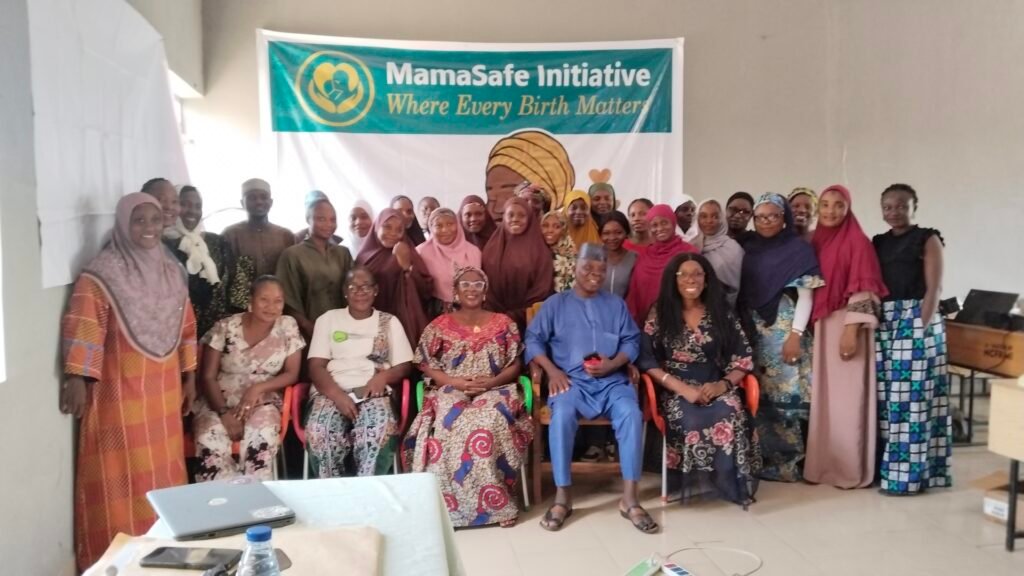
In just four months, MamaSafe reached more than 1,200 community members, equipped 1,000 pregnant women with clean delivery kits, trained 56 frontline health workers and saw encouraging improvements in facility delivery and skilled birth attendance.
For a pregnant woman preparing to give birth, something as simple as a sterile blade, clean delivery surface or pair of gloves can make an important difference.
Yet when Empower To Thrive Development Initiative began the MamaSafe Initiative in Akwanga and Keffi Local Government Areas of Nasarawa State, baseline consultations revealed that some women were still giving birth using improvised materials—including unsterilized blades and reused cloths.
Cost was part of the problem. So was limited information. And for some families, decisions about where a woman would give birth were influenced by husbands and other household members.
MamaSafe was designed around a simple principle: a delivery kit alone would not be enough.
With support from the TY Danjuma Foundation and Rotary Foundation Nigeria, and in collaboration with the Nasarawa State Ministry of Health, ETTDI combined three interventions: free clean delivery kits, stronger frontline health worker capacity and intensive community engagement.
Turning resources into measurable reach
Between October 2025 and February 2026:
- 1,000 MamaSafe Clean Delivery Kits were distributed through 21 Primary Health Care facilities.
- 56 midwives and Community Health Extension Workers were trained, exceeding the target of 50.
- 62 community sessions were conducted against an initial target of 20.
- 1,264 people were reached, including pregnant women, new mothers, husbands, community leaders and young people.
- 847 postnatal follow-up contacts were documented.
The health-worker training produced a particularly strong learning gain: average knowledge scores increased from 52% before training to 91% afterwards.
But the most encouraging changes were seen in childbirth practices.
Facility-based delivery increased from 74% at baseline to 85.5% at endline, while skilled birth attendance increased from 79% to 91.2%. Among new mothers who delivered during the project period, 95.3% reported using their MamaSafe Kit.
Because the project used a before-and-after design rather than a comparison group, these results cannot be attributed to MamaSafe alone. However, household surveys, health-worker assessments, facility information and focus group discussions all pointed in the same direction: the combination of practical support, trusted health workers and community engagement contributed meaningfully to safer childbirth practices.
An investment that changed more than one birth
MamaSafe also showed why donor investments can go further when commodities are linked to behaviour change and stronger local systems.
Women did not simply receive kits. They received counselling. Health workers were trained to use the kits appropriately and provide more effective birth-preparedness support. Husbands were engaged. Community and religious leaders became advocates. Primary healthcare facilities became the distribution point, strengthening the connection between women and formal maternal health services.
The next opportunity is scale.
The experience in Akwanga and Keffi provides ETTDI and the Nasarawa State Government with an operational model that can be expanded—while addressing remaining challenges such as kit stock-outs and the low proportion of women beginning antenatal care during their first trimester.
For partners seeking maternal and newborn health investments that combine tangible assistance with health-system strengthening and measurable learning, MamaSafe offers a promising model to build upon.
Partner With Us to Take MamaSafe Further